Showing posts with label Baked Goods. Show all posts

Sunday, July 20, 2025

Corn-Free Peach Pie Filling

     Peach pie, like many other fruit pies, ordinarily contains quite a lot of cornstarch. Use arrowroot: it gives just the right texture. 

     Another note about the texture: Cut the peaches into one-inch cubes rather than thin slices. This helps the peaches to keep more of their texture (rather than turning into mush).


I used einkorn flour (einkorn is an older variety of wheat)
for this crust as no wheat avoiders were coming over. 
Just remember that a lot of wheat flour contains corn products,
especially if it is bleached and/or enriched. Source your flour carefully.


     5 c. fresh, ripe
          peaches, 
peeled
          and cut into 
          1-inch cubes
          (See Produce in
           the 
Glossary.)

     1 Tb. freshly
          squeezed lemon
          juice 
          (See Juice in
          the
 Glossary.)

     1/2 c. sugar (See 
           Sugar in the 
           Glossary.)

     3 Tb. arrowroot
          starch

     1/2 tsp. cinnamon
          
(See Spices in
          the 
Glossary.)

     pinch of salt (See Salt in
          the
 Glossary.)


     Stir the lemon juice into the peaches. In a small bowl, combine all the remaining ingredients. Stir the dry ingredients into the peaches.
   
     To make the pie: Put the filling into a
 9-inch nonallergenic pie crust or other crust you are not allergic to and follow the baking instructions for the crust.

Thursday, March 4, 2021

Hypoallergenic Oat Cookies


These delicately flavored, tender little cookies melt in your mouth. 

     1 c. palm oil shortening
     1 c. powdered sugar (See Powdered Sugar in the Glossary
     1 Tb. vanilla extract 
     3 c. gluten-free oat flour
     pinch of salt (See Salt in the Glossary
     powdered sugar to roll the cookies in

     Melt the shortening. Stir in the one cup of powdered sugar and the vanilla extract. Stir the salt into the oat flour, and mix the flour into the shortening. Shape into one-inch balls and place 2 inches apart on an ungreased cooky sheet. Refrigerate for at least 1/2 hour. Preheat oven to 350 degrees F. Bake 15 minutes or so, until cookies just start to brown. Move cookies to a rack to cool. Roll in powdered sugar while still a bit warm.


Tuesday, March 24, 2020

Hypoallergenic Small Savory Pastries


Filled with hypoallergenic leek filling. One recipes fills 3-4 pastries.

     Oh, those flaky, savory little pastries stuffed with spinach (spanakopita), feta/parsley or other good things! The fillo dough with which they are usually made is, of course, wheat; in addition it is likely to contain soy or corn additives, and the individual sheets are dusted with cornstarch to keep them from sticking to each other. You can, however, get quite good results using spring roll wrappers made of rice.


The ingredients of this product are:
"rice flour, tapioca flour, water, salt."
Also, there are no waxed sheets (corn? 
soy? dairy?) or sprinkles of cornstarch
between the sheets of pastry.

     rice spring roll wrappers
     any filling you like (beef, leeks, summer squash, mushroom, spinach
          feta/parsley...) that isn't too damp: you don't want to sog up the wrappers.
     oil for frying  (See Oil in the Glossary)

     Carefully take one wrapper from the package. They are very thin and crack easily. Wet every part of the wrapper under the faucet. Lay down on a flat surface and wait a few seconds. After a few seconds it will be soft, pliable and sticky. Place a bit of filling near the bottom edge and turn the bottom edge up over it, as shown in (A). Fold the left and right sides of the wrapper over the filling, as shown in (B). Roll the pastry up, making sure to leave as little air inside the pastry as possible (C). Otherwise the air will expand while you're cooking it, forming annoying big bubbles. The wrappers become very sticky when wet, so you don't need an egg wash or flaxseed meal to hold the pastries together.
     Once the pastries are rolled up, put 1/4 inch or so of oil in a skillet and heat to medium. Put the pastries in the oil and cook until the bottom of each one is golden brown and crisp. Turn each one over and cook the other side. Remove from oil and allow to cool for a couple of minutes; otherwise they're too hot to eat. Serve warm.


       (A)                                                                    (B)                                                      (C)


Sizzling nicely

Friday, November 1, 2019

Allergen-Free Buckwheat Pancakes and Teff Pancakes


     The first time I made pancakes for my grandson was memorable. I knew he was allergic to wheat, dairy, and eggs, so I started by mixing up the standard flour described in many gluten-free cookbooks. This is a mixture of rice flour, tapioca starch and potato starch. 

    Rice flour gives a gritty, sandy character to baked goods, so one reason for blending it with fine, powdery starches is to obtain a finer texture overall.  This is a bit like discovering, at the beach, that sand has gotten into your sandwich and deciding that you can fix that by adding a couple more slices of tomato: whatever you add, the sand is still there. 

     Anyway, I added "egg replacer," which is a chemical that is usually derived from corn, to which I am allergic (oh well), threw in rice milk, oil, etc. and got cooking.  Those pancakes did not rise, they did not hold together, and they did not have any flavor.  One of my daughters said something about "the texture of wet sand."  My husband was so shocked he still won't eat anything that is clearly labeled as "gluten-free." Even our greedy-gut dog refused to eat the darned stuff.  

     The following is the pancake recipe I came up with after much tinkering. Buckwheat, besides being a classic pancake flavor, is a surprisingly good binder, giving these pancakes a conventional pancake texture. 

     These pancakes contain no gluten or eggs, and, depending on your choices of milk and oil, can easily be dairy-, soy- and/or corn-free as well.

     1 c. teff flour 
     1/2 c. buckwheat flour
     3/4 tsp. baking soda
     1/2 Tb. cream of tartar
     1/2 tsp. salt (See Salt in the Glossary)
     2 Tb. sugar (See Sugar in the Glossary)
     1-1/2 c. milk (or "milk") (See Milk in the Glossary)
     1/4 c. oil (See Oil in the Glossary)

     Preheat a skillet on medium low on a stovetop (or preheat a griddle to 350 degrees Fahrenheit). Stir the flours, baking soda, cream of tartar, salt and sugar together in a mixing bowl.  Stir in whichever milk and oil you’re not allergic to. Allow the batter to sit for a couple of minutes so that some bubbles can develop. Scoop by half-cupfuls into the preheated skillet (or onto the preheated griddle). Flip when nicely browned on one side; remove from heat when cooked through. 


Teff Pancakes

      Teff has a particularly mild flavor and makes excellent pancakes. 


     1-1/2 c. teff flour 
     1/4 c. flaxseed meal
     3/4 tsp. baking soda
     1/2 Tb. cream of tartar
     1/2 tsp. salt (See Salt in the Glossary)
     2 Tb. sugar (See Sugar in the Glossary)
     1-1/2 c. milk (or "milk") (See Milk in the Glossary)
     1/4 c. oil (See Oil in the Glossary)

    Preheat a skillet on medium low on a stovetop (or preheat a griddle to 350 degrees Fahrenheit). Grind the flaxseed meal in a coffee/spice grinder. Stir the teff flour, ground flaxseed meal, baking soda, cream of tartar, salt and sugar together in a mixing bowl.  Stir in whichever milk and oil you’re not allergic to. Allow the batter to sit for a couple of minutes so that some bubbles can develop. Scoop by half-cupfuls into the preheated skillet (or onto the preheated griddle). Flip when nicely browned on one side; remove from heat when cooked through. 


Saturday, August 17, 2019

Berry-Free, Corn-Free Peach Rhubarb Pie Filling


The peach-rhubarb filling in this pie contained no common allergens and
was delicious. I used wheat flour for the crust as no wheat avoiders were
coming over.  Just remember that a lot of wheat flour contains corn products,
especially if it is bleached and/or enriched. Source your flour carefully.


     An allergy to strawberries is no reason not to enjoy rhubarb, and an allergy to corn is no reason not to make pie filling out of it. Peaches and rhubarb complement each other deliciously, and in my opinion a bit of orange peel accentuates their flavors. If you react to the corn, soy or dairy derivatives that show up in wax used to coat fruit, you can either try to scrub it off the orange or just skip the orange rind.
     Tapioca flour gives this filling just the right amount of thickening without setting off anyone's corn allergy.

     2/3 cup sugar (See Sugar in the Glossary)
     3 Tb. tapioca flour
     2-3/4 cups fresh rhubarb cut into 1/4 inch slices
     2 cups peeled, sliced fresh peaches (See Produce in the Glossary)
   

     Stir together the sugar, tapioca flour and orange rind. Stir into the rhubarb and peaches. Follow the instructions for filling and baking a nonallergenic pie crust  or just bake the filling  with a crumble on top. Serve chilled.

     Makes enough for one 9-inch pie. 

Tuesday, June 4, 2019

Corn-Free Strawberry-Rhubarb Pie Filling


     Strawberry-rhubarb pie filling is ordinarily thickened with cornstarch; otherwise it would be soupy. This recipe relies on tapioca flour to get the right amount of thickening.

     2/3 cup sugar (See Sugar in the Glossary)
     3 Tb. tapioca flour
     2-3/4 cups fresh or frozen rhubarb, cut into 1/4 inch slices
     2 cups sliced fresh strawberries (2-4 slices per strawberry) See 
          Produce in the Glossary
    
     Stir together the sugar and tapioca flour. Stir into the rhubarb and strawberries. Follow the instructions for filling and baking a nonallergenic pie crust or just bake a crumble on top of the filling.  Serve chilled.

     Makes enough for one 9-inch pie. 

Wednesday, September 20, 2017

Small Zucchini Bread Rounds with None of the Usual Allergens


     Getting baked goods to rise and then cook before they have time to collapse is challenging if you can't use gluten, eggs or any bean, pea or corn derivatives (pea flour, garbanzo flour, soy flour, xanthan gum, etc.). This recipe relies on the following principles to produce zucchini bread with a good texture rather than a strange, flat loaf:
  • Chilling the ingredients beforehand helps keep the dough stiffer as it starts to cook.
  • A thin layer of dough or batter will cook faster than a thick one. Keep your dough a half-inch deep or less.
  • A higher temperature will cook your dough faster, and works fine for a thin layer of dough.
  • Metal conducts heat better than glass. Use a metal pan.
  • Increasing the contact area between the dough and the conductive metal will help the dough cook faster. Use a metal muffin pan rather than a metal cake pan or loaf pan.

     1/2 c. grated zucchini
     3 Tb. liquid 
     2 Tb. flaxseed meal
     1/2 c. sugar (See Sugar in the Glossary)
     1/4 cup palm oil shortening
     1/2 tsp. vanilla extract  
     3/4 c. sorghum flour
     1/4 c. buckwheat flour
     1 tsp. baking soda
     2 tsp. cream of tartar
     1/2 tsp. salt (See Salt in the Glossary)


     Squeeze the excess moisture out of the zucchini. 
  
     In a small saucepan, stir the flaxseed meal into 3 Tb. liquid (any variety of milk or "milk" you are not allergic to [See Milk in the Glossary], lemon juice, the juice you squeezed out of the zucchini and/or water). Heat just until the mixture bubbles and thickens. Mix the flaxseed meal mixture with the sugar, shortening and vanilla. Stir in the zucchini and refrigerate. 

     Stir together the sorghum flour, buckwheat flour, baking soda, cream of tartar and salt.   Refrigerate this mixture too. Wait for 1/2 hour.

     Preheat oven to 450 degrees. 

     Grease ten 2" muffin cups. Mix the zucchini mixture and the flour mixture to make a stiff dough. Divide the dough among the ten greased muffin cups. Bake for 18-20 minutes, until lightly browned. 


Monday, March 6, 2017

Sugar Cookies Without the Usual Allergens


     These cookies have a rather conventional flavor and texture in spite of containing no wheat, eggs, corn or soy.


     3 cups sugar (See Sugar in the Glossary)
     1-1/2 c. palm oil shortening     
     1 c. of any variety of milk or "milk" you are not allergic to. You can 
          use water if necessary  (See Milk in the Glossary)
     2 Tb. corn-free vanilla extract 
     2-1/2 c. rice flour (superfine rice flour if you can find it: it gives a better 
          texture)     
     1 c. coconut flour  (See Coconut in the Glossary)
     6 Tb. potato starch
     1-7/8 tsp. baking soda
     3/4 tsp. cream of tartar


     Preheat oven to 350 F. Cream together sugar and shortening. Add vanilla and milk and beat. Mix the remaining (dry) ingredients together. Add dry mix to wet ingredients and mix until blended. Place by tablespoonfuls on greased cooky sheet and bake 10-15 min.


Thursday, December 22, 2016

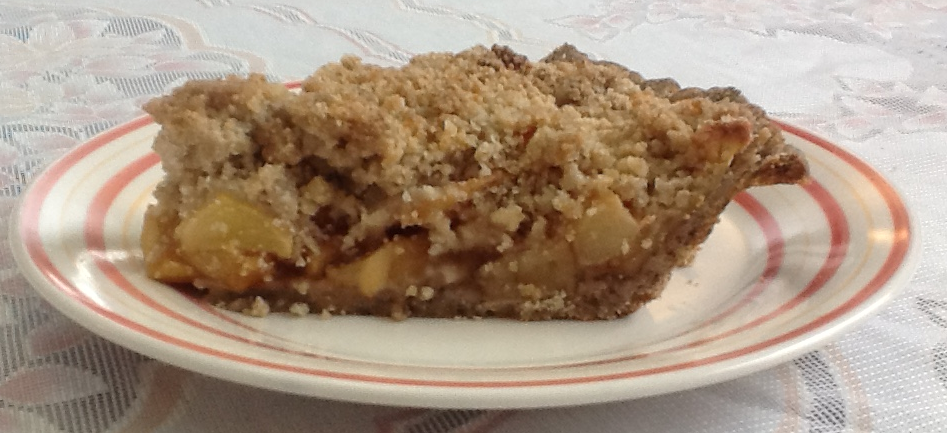
Hypoallergenic Apple Pie


     Besides the multiple allergens in most pie crust (wheat, shortening made of corn and soy), commercial fruit fillings for pie are generally thickened with cornstarch and/or wheat flour. If corn and wheat are both a problem at your house, it may be time to learn to make pie. 

     Apples vary quite a lot in terms of their sweetness, tartness, juiciness and tendency to soften up when cooked. Adjusting your recipe to the apples at hand can be tricky; I think it's easier to always use the same variety and tweak your recipe until you get it just the way you like it. I use Yellow Delicious apples because they soften up nicely but don't release a huge amount of juice. I don't like the filling to be really wet: for one thing, it can sog up the bottom crust.  
     
     1/2 c. sugar (See Sugar in the Glossary)
     2-3 T. tapioca starch
     1/4 tsp. salt (See Salt in the Glossary)
     1/2 tsp. cinnamon (See Spices in the Glossary)
     ripe Yellow Delicious apples (enough to produce 5-6 cups of apple slices 
          (See Produce in the Glossary)
     (optional) sprinkle of freshly squeezed lemon juice (See Juice in the 
          Glossary)

     Preheat your oven to 425 degrees.

     In a medium bowl, stir the sugar, tapioca starch, salt and cinnamon together; set aside.  Wash, quarter, and peel some apples.  (The point to peeling is to remove any corn-, soy- or dairy-containing wax on the surface or any trace of mold or yeast growing on the outside of the apple. If you aren't allergic to any of these things, you can skip this part.) 


Ready for a top crust or some crumble

     Remove every bit of the core from each quarter, and slice it into ~1/3-inch slices. When you have 5-6 cups of apple slices, toss them with the sugar mixture. 

     Distribute the apples evenly in a pie plate (with or without a bottom crust). Sprinkle with a little lemon juice if you want.


Remember that you can totally skip
the part about making pie crust. Put
some crumble on top of apple pie
filling and start baking.

     Top with either a top crust or one recipe of crumble and  bake at 425 for 15 minutes. Turn the oven down to 350 degrees and bake for another 45-55 minutes, until the crust and/or crumble are lightly browned.

Thursday, November 10, 2016

Chocolate Cookies Without the Usual Allergens


     These cookies have plenty of chocolate flavor and a rather conventional texture in spite of containing no wheat, eggs, corn or soy.

     1 c. sugar (See Sugar in the Glossary)
     1/2 c. palm oil shortening
     1/3 c. of any variety of milk or "milk" (See Milk in the Glossary)
     (optionall) 2 tsp. corn-free vanilla extract 
     1/2 c. rice flour (superfine rice flour if you can find it: it gives a better texture)
     1/3 c. coconut flour (See Coconut in the Glossary)
     1/3 c. cocoa (pure cocoa, not drink powder)
     2 Tb. potato starch
     5/8 tsp. baking soda
     1/4 tsp. cream of tartar
     
     Preheat oven to 350 F. Cream the sugar and shortening. Whisk in the vanilla and milk. In a small bowl, stir the dry ingredients together. Stir the dry ingredients into the shortening/sugar mixture, and mix just until blended. Scoop spoonfuls of the batter onto a greased cooky sheet and bake 10-15 minutes. These cookies are very soft when they come out of the oven: let them cool thoroughly before removing them from the cooky sheet.


One batch, ready to go into the oven

Wednesday, July 13, 2016

Chicken Pot Pie With No Wheat, Dairy, Soy, Corn or Peas


     Chicken pot pie usually contains a bunch of common allergens, but it doesn't need to. If you're allergic to corn and/or peas, the bags of "vegetable medley" in the frozen foods section at the grocery store are all useless, but there are plenty of fresh vegetables that taste good with chicken! 

     oil (See Oil in the Glossary)
     1/2 of a medium onion, chopped
     2-1/2 c. of diced veggies (whichever you like of carrots, celery, cauliflower, 
          fennel, cauliflower, broccoli, etc. Peppers can be good, but note that 
          most grocery store peppers are covered with wax containing soy, 
          corn or dairy.)
     salt (See Salt in the Glossary)
     black pepper (See Spices in the Glossary)
     1/4 tsp. thyme leaves (See Spices in the Glossary)
     2 c. of teff gravy 
     just over 1 lb. of raw, boneless chicken, diced and sauteed with a 
          smidge of oil just until it turns slightly golden and is cooked 
          through (See Oil in the Glossaryor 2 cups of diced previously 
          cooked chicken
     1 recipe of nonallergenic pie crust 

     Heat a tablespoon or so of oil in a skillet, add the onion and other veggies, sprinkle with salt, and saute on medium heat, stirring frequently, just until the veggies are tender and somewhat "cooked down." Add a sprinkle of black pepper and the thyme and continue cooking for another half minute or so. Stir the gravy into the cooked vegetables, add the chicken, and adjust salt and black pepper to taste. Chill (this is so the filling doesn't sog up the crust before the crust has a chance to cook). 

     Follow the instructions for filling and baking the pie crust.

Tuesday, March 22, 2016

Hypoallergenic Lahmacun


     Lahmacun, often described as "Turkish pizza" or "Turkish burritos," is one classic Turkish food that requires very little adjustment to be made free of major allergens.  Usually it has a very flexible crust made of a thin layer of wheat dough. This is topped by a spicy meat mixture.  After lahmacun is baked it is sometimes garnished with roasted eggplant mixed with a bit of freshly squeezed lemon juice and salt, chopped parsley and green onion dusted with a bit of sumac, parsley leaves, thin-sliced tomatoes and/or a squeeze of lemon juice.  Often it is folded up and eaten like a sandwich.
   

     In terms of allergens, the crust is the main complication. I use a Food for Life rice tortilla, which allows me to avoid both wheat and yeast. (It does contain xanthan gum, which may have a corn-based source, and the individual tortillas are separated by sheets of paper which also may contain corn products. It does not contain corn ingredients as such, and I tolerate it well enough in spite of my allergy to corn. This is, of course, no guarantee for other corn allergy sufferers.)  Unfortunately, rice tortillas are rather dry, break easily and tend to scorch.  The solution is to wet them before they go into the oven. This sounds like an odd thing to do, but it works like a charm. 


Topping: enough for about a dozen lahmacuns
     2 Tb. oil  (See Oil in the Glossary)
     2 onions, chopped small
     1 tsp. salt  (See Salt in the Glossary)
     6 cloves garlic, minced
     2 medium vine-ripened tomatoes, peeled, seeded and chopped  
          (See Produce in the Glossary)
     1 tsp. red pepper for a slight amount of heat; 1 tsp. paprika for mild 
           lahmacun (See Spices in the Glossary)
     1 tsp. black pepper (See Spices in the Glossary)
     1 c. firmly packed mint leaves, chopped fine (See Produce in the 
          Glossary) 
     1 c. firmly packed parsley leaves, chopped fine (See Produce in the 
          Glossary)
     1 lb. ground beef and/or lamb

Rice tortillas 


      Place a cooky sheet in the middle of your oven and preheat the oven to 425 degrees Fahrenheit.

     Heat the oil on medium heat; add the onions and saute gently until the onions are soft and translucent. Add the garlic and cook for another minute, taking care not to brown either the onions or the garlic. Set aside to cool while you measure all the other ingredients into a medium bowl. Add the onions and thoroughly knead the mixture together. 

     For each lahmacun: Thoroughly wet one rice tortilla and shake off the excess moisture. Scoop topping mixture onto the tortilla and spread it evenly (about 1/3 c. of topping mixture for a 9-inch tortilla). Take the cooky sheet out of the oven; depending on your cooky sheet, you may need to grease it lightly. Immediately transfer the lahmacun to the cooky sheet and put it back in the oven. Bake until the meat is cooked, about 8 minutes. 

     Alternatively, you can cook a lahmacun on top of a preheated griddle (350 F or so).


Raw                                                            Cooked                                                                  Rolled up


Friday, December 26, 2014

Nonallergenic Pie Crust


     There are now excellent gluten-free pie crusts on the market.  If your only food issue is gluten, I highly recommend them. If you are allergic to the soy, corn or other additives that are used to give these crusts a good texture, you can try the following recipe. 

     This dough, while somewhat more fragile than a wheat dough, is cooperative enough that you can actually roll it out and get it into a pie plate, especially if you follow the suggestions given below. The flaxseed meal and sorghum flour, besides giving the dough a more workable texture than most gluten-free pie dough, give the crust a good texture and a mild grainy flavor, reminiscent of partially whole wheat crust. The recipe makes enough for two layers for a 9-inch pie plate.

      6 Tb. ground flaxseed meal
     ½ c. + 1 Tb. cold water
     2 c. sorghum flour or gluten-free oat flour (personally, I like to mix them
          50/50)
     1-1/4 tsp. salt (See Salt in the Glossary)
     2/3 c. palm oil shortening or lard 

     Mix the flaxseed meal with the water in a small pot. Stirring constantly, bring to a full boil. The mixture should now be thick and gluey.  Refrigerate it until it is cold. In a medium-size mixing bowl, stir the salt into the flour and cut the shortening into it until it resembles coarse crumbs.  Add the flaxseed mixture and knead it in until the dough forms a ball that mostly holds together. You can add a small amount of cold water if necessary to hold the dough together. Divide into two halves and roll each half out into one layer of pie crust following the suggestions given below, sprinkling it as needed with sorghum or oat flour to keep it from sticking.

Bottom Crust

     Preheat the oven (following the instructions for the pie filling) and grease the inside of your pie plate. (Unlike regular pie dough, this dough will stick if the pie plate is not greased.) Roll the crust out on the outside bottom of a large, flat skillet (or tray), making sure that the skillet is well-floured and the pie crust is not sticking to it anywhere.  If necessary, slide a spatula between the tray or skillet and the dough to unstick it all the way around. If you are not allergic to the corn, soy, or dairy products in the wax on waxed paper, you can use that instead.

     Do not try to pick your pie crust up by hand and pop it into a pie plate! Not being held together by gluten, it doesn’t have as firm an opinion about what shape it is. The downside to this is that it is more inclined to break when you try to move it.  The upside is that repairs are actually easier. 

     Center a 9-inch pie plate upside down on top of the pie crust. Keeping one hand on the pie plate and holding the skillet with the other hand, flip them over together and lift off the skillet. 
   
     If your bottom crust breaks, you can reassemble the pieces inside the pie plate and just press them firmly together.  If you need to, collect all the pieces and roll the dough out again. “Overworking” a regular pie crust can cause it to become stiff and tough. This is because of the gluten bonding to itself. With a gluten-free crust, this is not a problem, so don’t worry about rolling your dough out or otherwise fiddling with it as much you need to.

     If you find this method intimidating, your only allergen is gluten, and you’re making a sweet pie (not chicken pot pie or something), get one package of Pamela’s Shortbread cookies, grind them all up in a food-processor, and press the result onto the bottom and sides of a pie plate. This is also an excellent crust for cheesecake (again, assuming your only food issue is gluten).


Top Crust

     With a top crust you don’t have the luxury of playing with the dough until you get it right.  Once it touches  the pie filling, you’re committed to proceeding forward. Your options are as follows.

1.  Roll the top crust out on the outside bottom of a large skillet or tray, as described above for the bottom crust. Put the filling on top of the bottom crust. With a wet finger, dampen the edge of the bottom crust all the way around. Make sure the dough is nowhere stuck to the skillet. Pick the skillet up by the handle, hold it next to the pie plate containing the bottom crust and the pie filling, and turn the skillet over so as to plop the top crust into place.  Use leftover dough to patch as needed. Use a knife to cut off the excess dough hanging over the rim of the pie plate. Use a fork to press the top crust against the bottom crust all the way around on the rim.  Prick the top crust in a few places with a fork so air can escape while the pie is cooking.

2. If your pie dough seems a bit crumbly or you just feel leery of trying to flip the top crust into place, make a lattice top:  slice the rolled out top crust into strips and use a spatula to pick them up one by one and put them in place. If a strip breaks, you can always patch it with another small bit of pie dough.

3. If you are making a fruit pie, you can skip the top crust altogether and put one recipe of Crumble Topping on top of it.


Baking and Refrigerating

     Bake the pie at 450 F for 15 minutes, then turn the heat down to 350 and bake for another 45 minutes or until the crust is golden brown (or follow the instructions for the filling). Note that the bottom crust (and, most likely, the filling) will be firmer if the pie is thoroughly chilled before it is served.